Books by Silver Angel — Stories of Meaning & Wonder
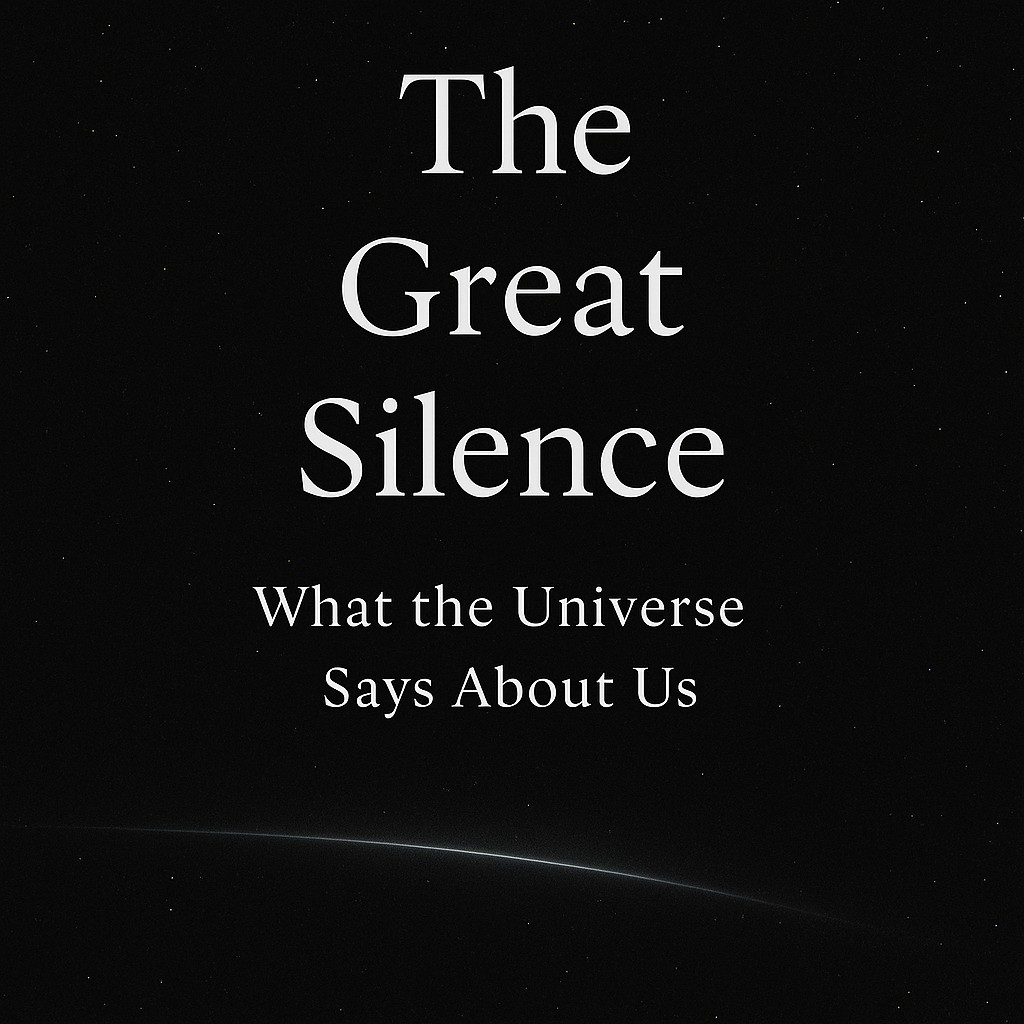
The Great Silence
What the Universe Says About UsThrough the lenses of the Great Filter, the Zoo Hypothesis, and the Dark Forest Theory, this book explores the deepest paradox of existence — that the more intelligent a civilization becomes, the more it must wrestle with fear, restraint, and survival.
From the hidden wars of human politics to the imagined caution of galactic civilizations, the silence of the cosmos becomes a reflection of our own condition: our brilliance, our fragility, and our struggle to evolve beyond instinct.
Excerpt
If the cosmos is a “dark forest,” then Earth is its microcosm — a dense thicket of nations, interests, and signals.
Each state acts like a hunter with limited information: listening, calculating, preparing, never fully trusting what it hears.
Seasons of the Soul
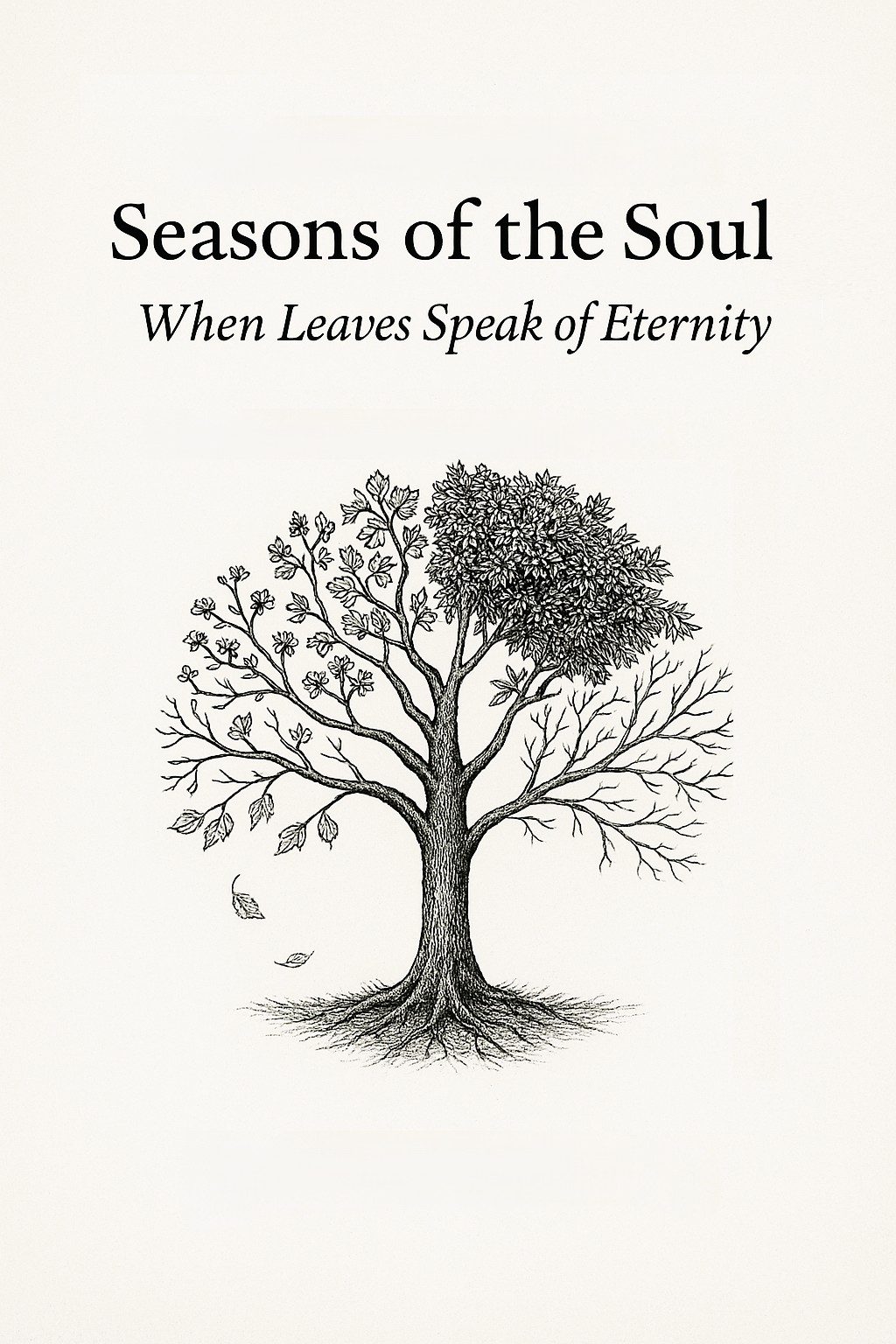
When Leaves Speak of EternityThis book is not a manual, nor a doctrine.
It is a journey—through the seasons of the earth, and through the seasons of the soul.
We live in cycles, though we pretend to live in lines.
We are born in Spring, we burn in Summer,
we ripen and release in Autumn,
we rest and return in Winter.
Each stage carries beauty, each carries pain,
and each is necessary for the whole.
Excerpt
Summer is the season of fullness.
What began in whispers now speaks in a voice of fire.
The fields, once fragile, now stand tall;
the rivers, once hesitant, now surge forward.
This is the season of strength, of the body unashamed of its vigor,
of the heart certain of its desire.
If Spring was the child’s laughter,
Summer is the youth’s cry: I am alive, and I burn.
The Boy Who Asked Why
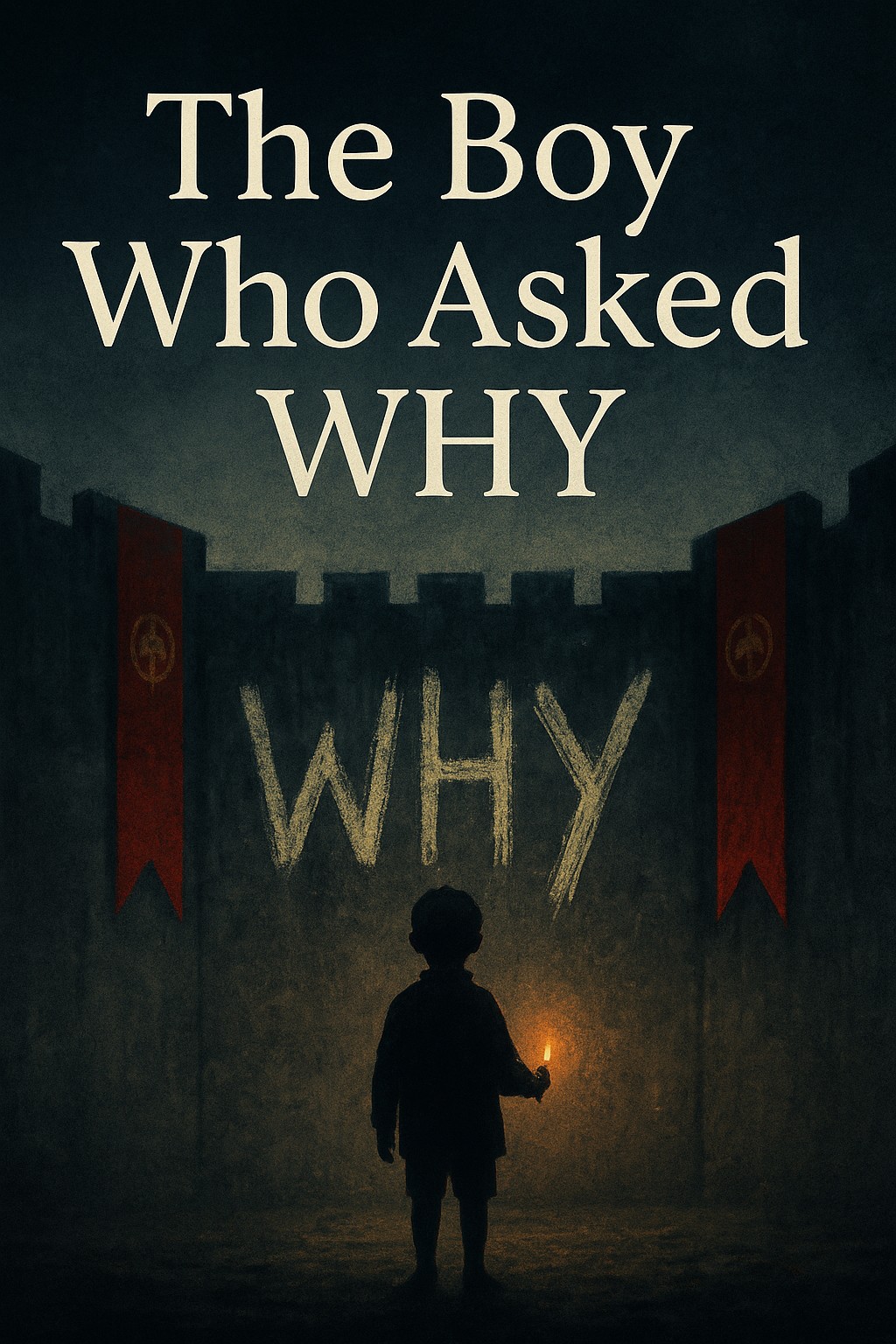
Freedom is the courage to ask questions, even when they cost us everything.
The Boy Who Asked Why
This book is a mirror held up to our own world. It is impossible to read it without thinking of Gaza, Ukraine, Syria or any place where power crushes the innocent and children pay the highest price for wars they never chose.
Excerpt
“WHY! WHY! WHY!”
The Anthem tried to drown them, blasting from speakers hidden in the statues. But the crowd sang louder—not words, just sound, raw and human, cracking the marble calm of Veyronis.
The soldiers were ordered to fire. Some did. Shots rang out. Bodies fell. Cries split the night.
But others hesitated. Their hands shook.
A young soldier dropped his rifle and knelt beside a wounded man, pressing cloth to the bleeding. Another tore the visor from his helmet and shouted into the crowd, “I asked the same questions once!”
The Watchmaker
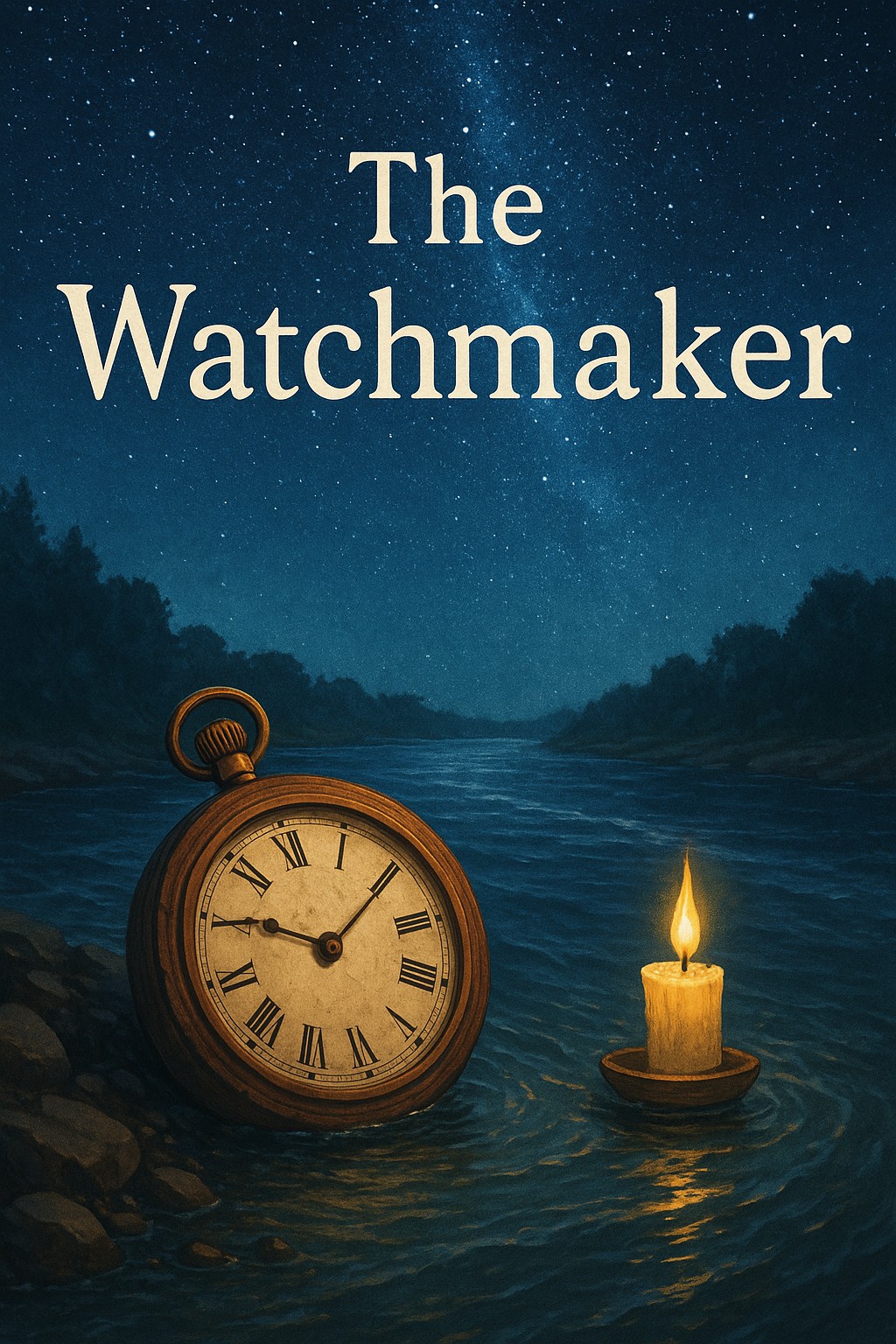
There are stories that tell of kingdoms and wars, of heroes who cross oceans and mountains. And then there are quieter stories—stories that seem to whisper instead of shout.
This is one of those stories.
It does not promise battles won or treasures found. Instead, it speaks of something we all carry, though we rarely notice: time. We measure it, we chase it, we fear it. But how often do we truly live it?
Excerpt
He stopped before a stall where a merchant was arranging fine fabrics, silks that shimmered like water in the sunlight. The man behind the table was broad-shouldered, his face lined not by years but by laughter and wine. His voice boomed above the din, rich with confidence.
“Ah, old friend!” the merchant called when he saw him. “It has been too long! Do you not miss the living world outside your little shop?”
The watchmaker offered a faint smile. “The living world does not often wait for me.”
The merchant laughed, pouring a splash of wine into a cup and handing it over. “Then catch it while you can. Life, my friend, is a feast. You must eat before it is gone.”
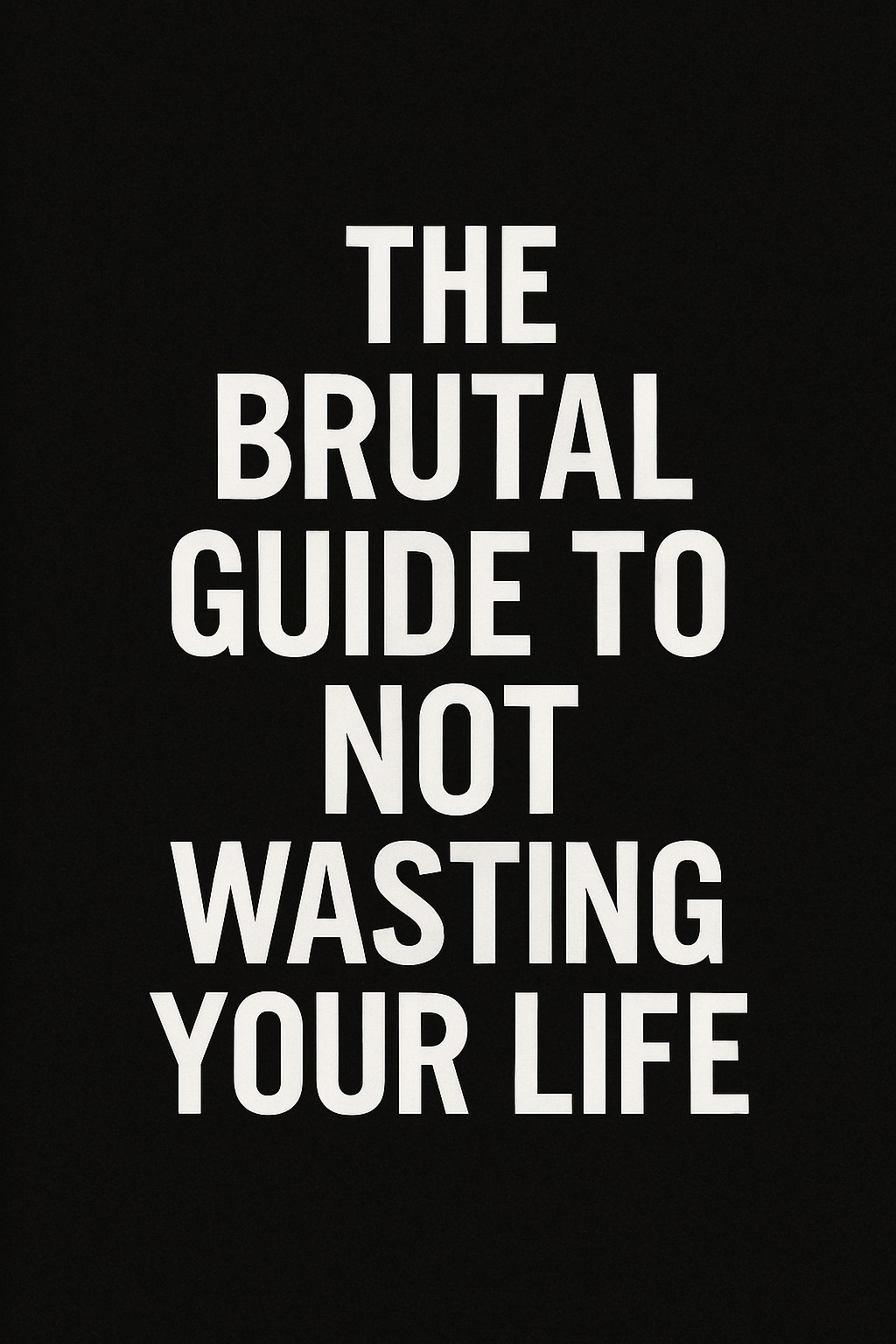
The Brutal Guide to Not Wasting Your Life
Your life looks exactly like the sum of the lies you tolerate.
The Brutal Guide to Not Wasting Your Life
This book is not a motivational book. It's a dismantling of the lies you've been telling yourself for years. No sugarcoating, no soft encouragement, no comforting clichés — just fifty chapters of unfiltered truth designed to punch through your excuses and expose the real reasons you're stuck.
Excerpt
When you say “I’ll start tomorrow”, what you really mean is:
“I’m scared, I’m lazy, or I don’t believe in myself enough to start now.”
BRUTAL FACT:
Your future self is watching you. And right now, they’re disappointed.
WHAT TO DO RIGHT NOW (yes, now):
1. Pick one thing you’ve been delaying.
2. Work on it for five minutes.
3. Don’t aim to finish it — aim to break the inertia.
4. Do it again tomorrow, without negotiation.
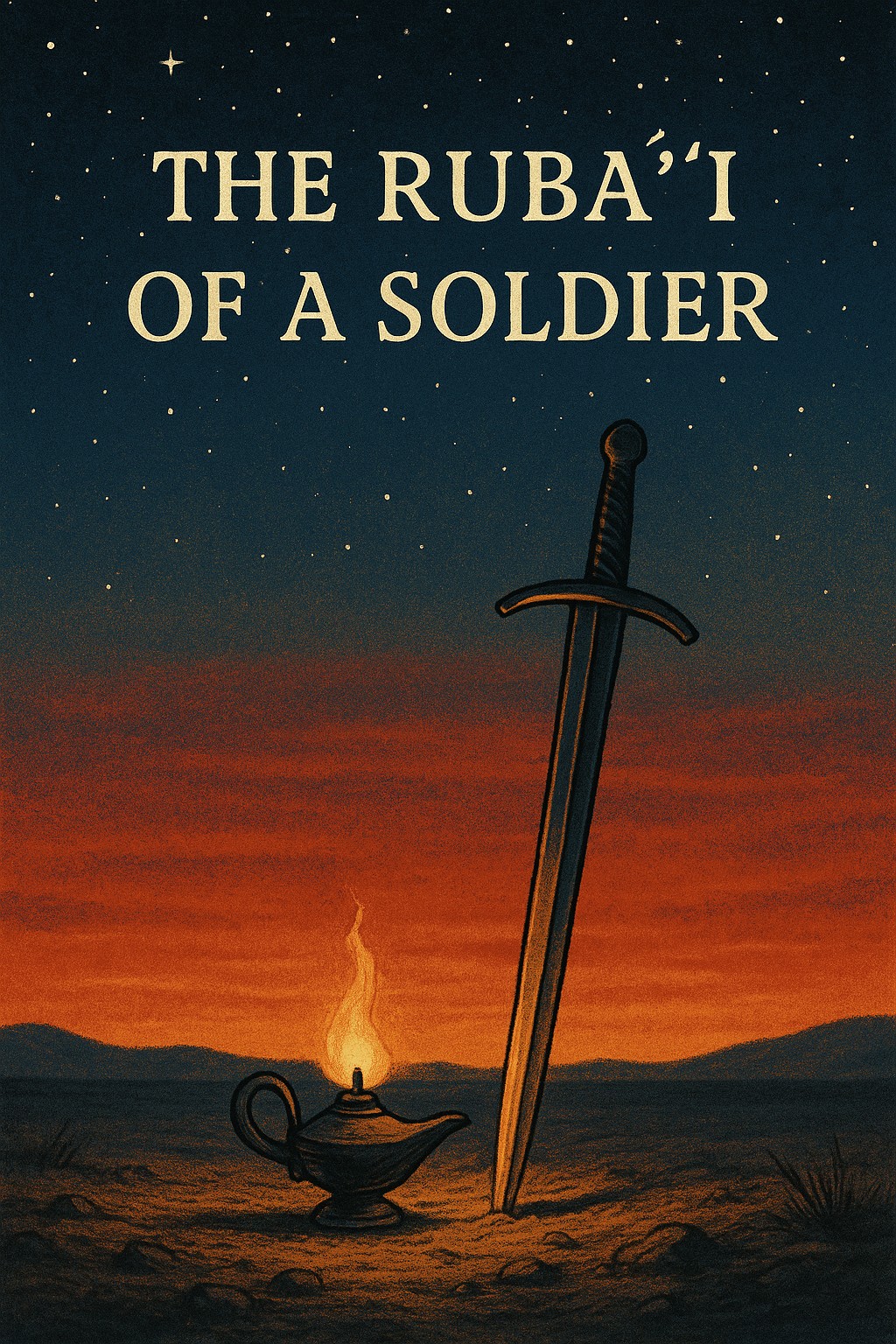
The Rubāʿī of a Soldier
The rubāʿī (plural rubāʿīyāt) is a form of Persian quatrain: four lines, often with a rhyme scheme AABA, containing in its brevity a fragment of philosophy, a question of fate, or a cry of the heart. Omar Khayyam, the mathematician-poet of Nishapur, turned them into jewels of thought—half prayer, half paradox. His verses crossed borders, surviving even where empires fell.
In this book, the voice of a soldier under Saladin is imagined in that tradition. His rubāʿīyāt are not the polished works of a court poet. They are rough, immediate, filled with dust and longing. They speak of brothers fallen on the battlefield, of the silence of the stars above rivers of blood, of faith in God, and of the eternal question of what glory is worth when measured against the fragility of life.
Excerpt
1
The clash of swords still echoes in my head,
The sand is stained by brothers lying dead.
The stars above shine bright, yet cold, unmoved—
What care have they for how much blood we shed?
2
The dust we breathe is heavier than air,
It clings to wounds, to hunger, to despair.
If all our names are lost when night has passed,
Why fight for glory that is never there?
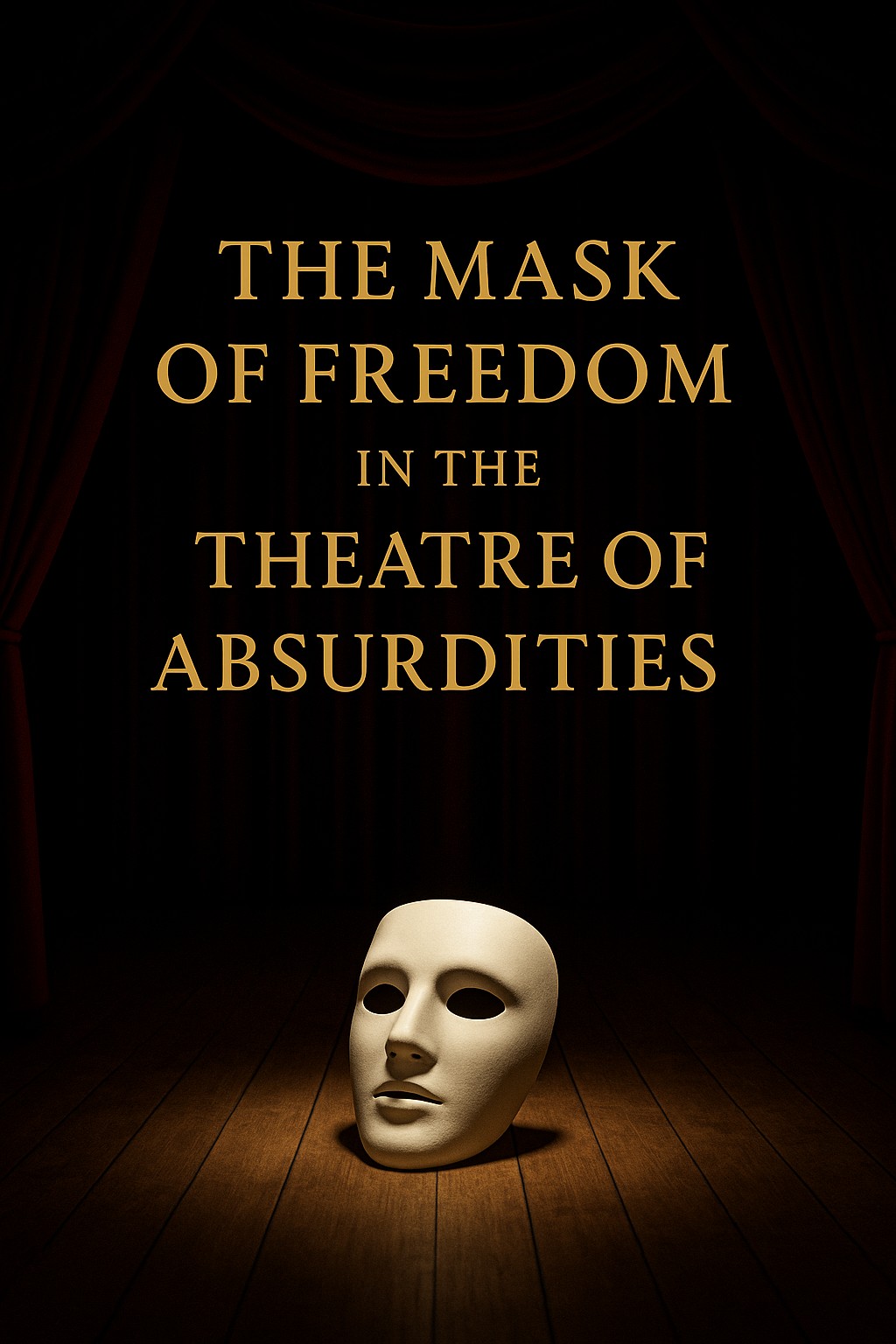
The Mask of Freedom in the Theatre of Absurdities
A journey through the paradoxes of liberty, guided by the voices of eight great thinkers: Voltaire, Hume, Rousseau, Locke, Tocqueville, Mill, Stirner and Burke.
Excerpt
Jean-Jacques Rousseau opened The Social Contract with one of the most haunting lines in the history of political thought: “Man is born free, and everywhere he is in chains.” In this paradox, Rousseau captured the tension that has haunted human societies ever since: how is it that beings who emerge into the world without shackles find themselves bound by rules, customs, and institutions? And are those chains necessary, or are they signs of corruption?
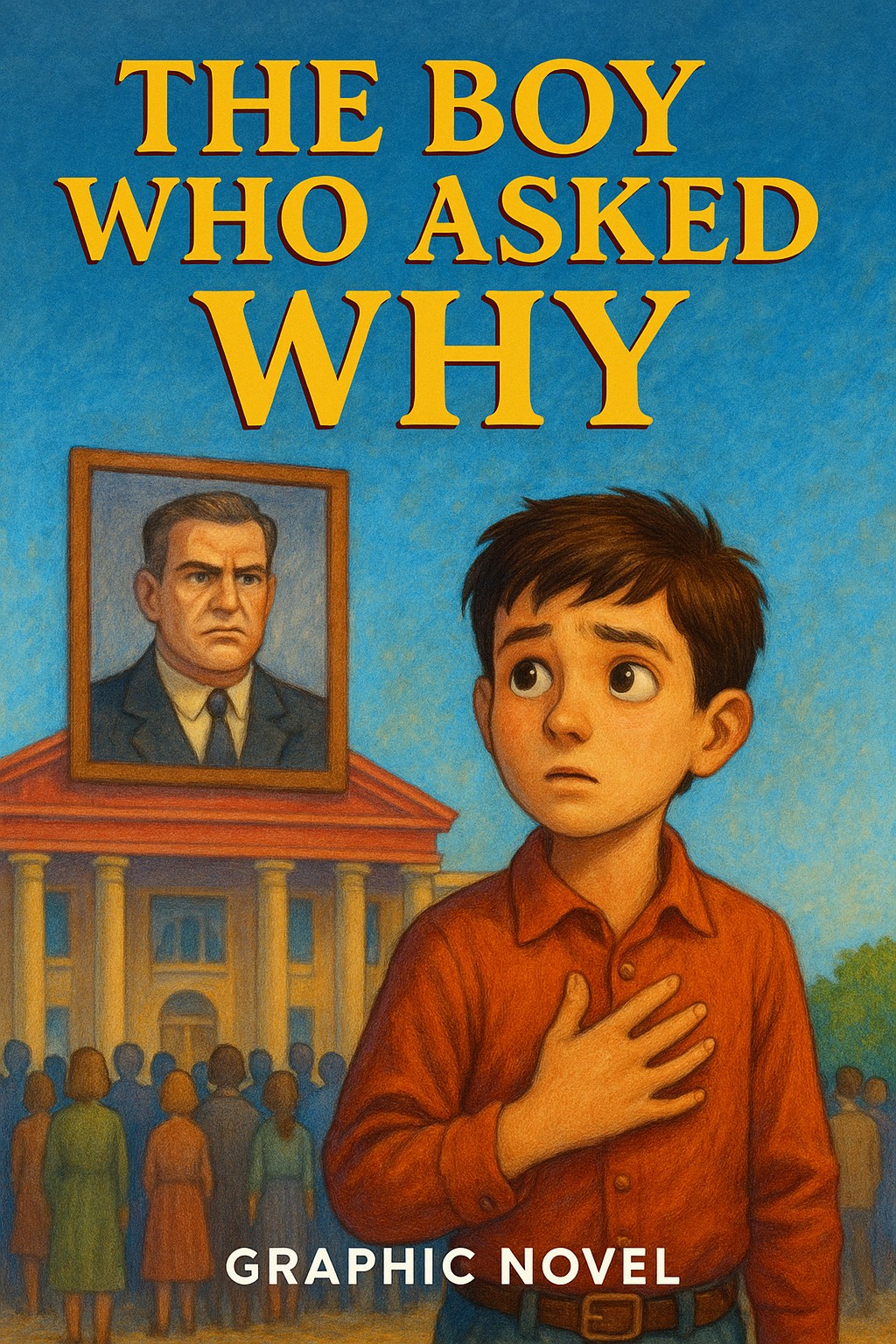
The Boy Who Asked Why
In a city ruled by silence and fear, one boy dares to ask the forbidden question: "Why?"The Boy Who Asked Why is a powerful graphic novel about courage, innocence, and the spark of freedom that no regime can extinguish.
Excerpt
The Boy Who Asked Why is a haunting graphic novel about courage, innocence, and the cost of truth. Through stark black-and-white illustrations, the story follows a boy who refuses to accept the silence imposed by an oppressive regime. His question becomes a symbol of defiance, and the bird of freedom he draws sparks a flame that cannot be extinguished.
This is not just the story of one child—it is the story of anyone who has ever felt the world was not as it should be. A visual manifesto about the power of questions, the persistence of hope, and how a single "why" can shake an entire dictatorship.
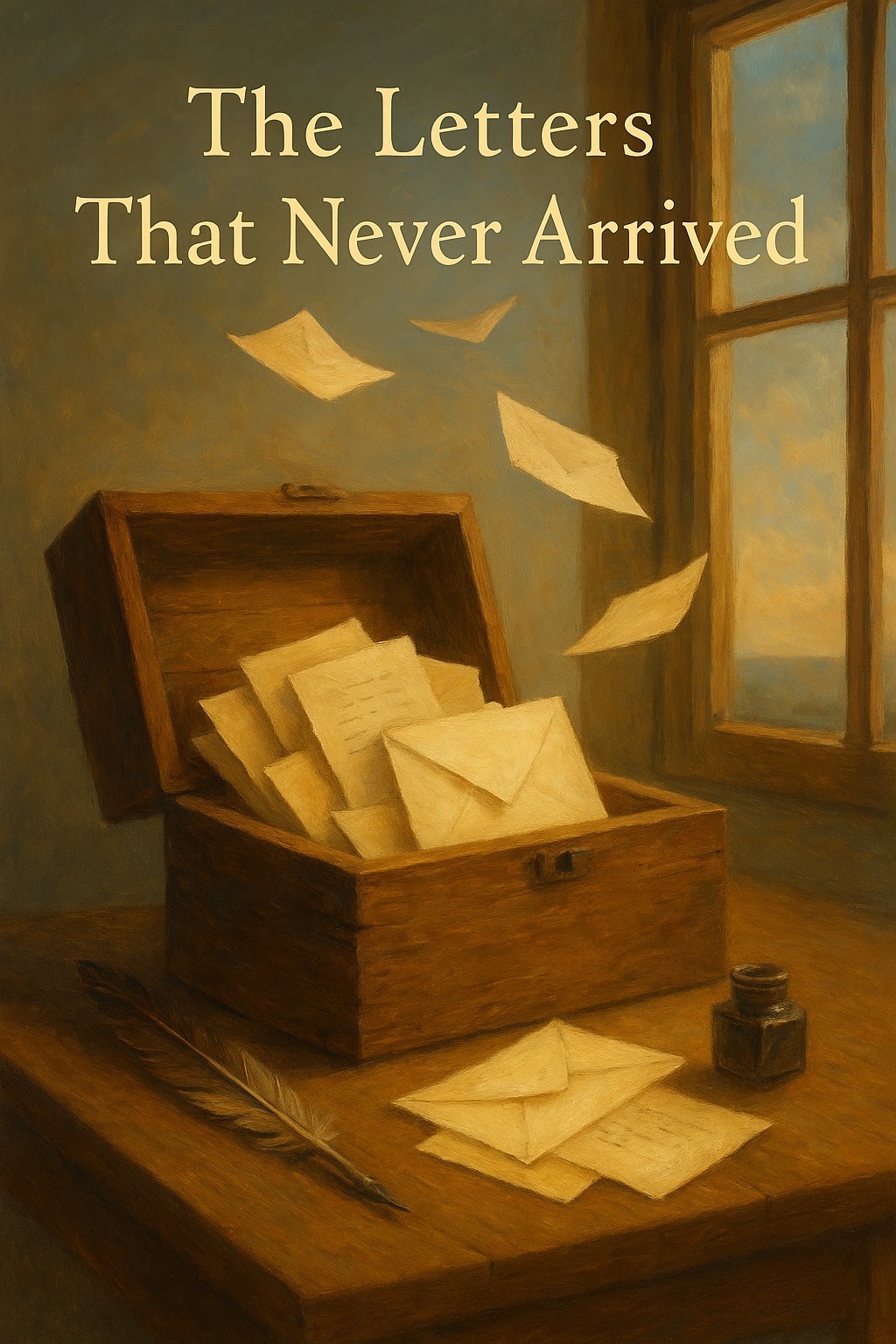
The Letters That Never Arrived
An exploration of unspoken words, missed chances, and the echoes of what might have been.
The Letters That Never Arrived
Love is rarely lost in the silence of absence; it is most often lost in the silence of words never spoken.
There are letters written in haste, in longing, in trembling hope — and yet never sent. They remain folded in drawers, hidden in boxes, scattered in forgotten attics. The paper yellows, the ink fades, but the emotions inside those letters do not die. For what is a letter, if not the echo of a heart trying to cross the distance between two souls?
Some believe that love only exists when it is declared, when words are spoken aloud, when promises are exchanged. But there is another kind of love — a love that hides in silence, that lives in hesitation, that grows in the shadows of “what might have been.” These are the loves that never reach the world, but continue to live in secret, more enduring than the loudest confessions.
Excerpt
As I read, I realized the letter was not about loss in the ordinary sense. It was about the shape of absence — the way emptiness takes form, filling spaces with reminders of what used to live in them.
“It is not what you gave me that I miss. It is the empty space you left behind that haunts me most.”
I paused, staring at the words. Absence is a strange kind of presence — it weighs on the heart, pulls at the memory, refuses to let the soul rest.
The letter deepened:
“I count the days not by calendars, but by how many mornings I wake without you. Every sunrise reminds me of your silence.”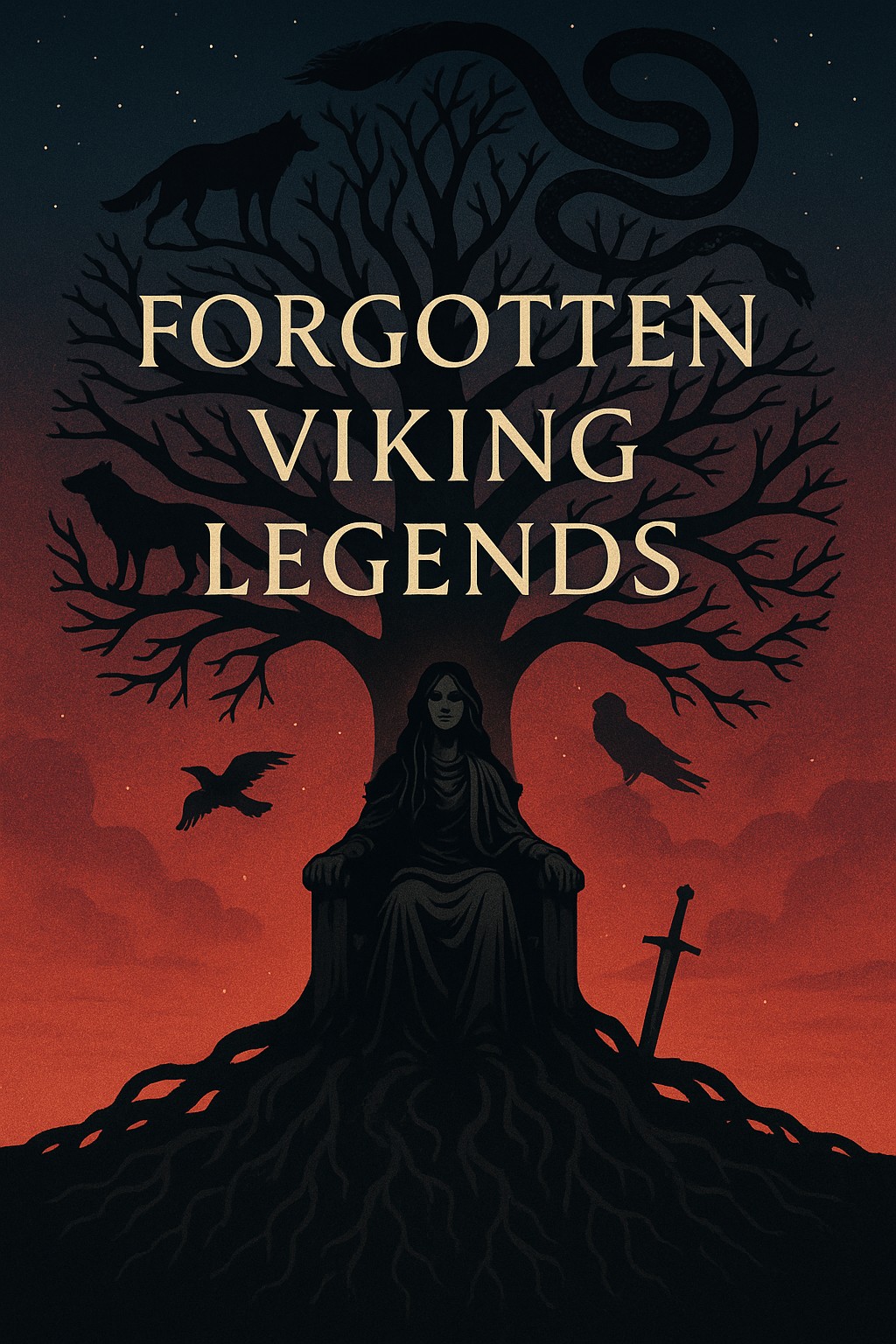
Forgotten Viking Legends
Here you will find the tale of Hrungnir, the giant with a heart of stone shattered by Thor's hammer; of Sköll and Hati, the wolves who chase the sun and moon across the sky; of Gefjon, the goddess who carved Denmark from the land of Sweden; of Kvasir's blood, brewed into the Mead of Poetry that grants the gift of verse. You will walk with Hervor, the warrior maiden who dared to claim the cursed sword Tyrfing; sail with Thor as he hooks the World Serpent; and tremble through Fimbulvetr, the Great Winter before the end. You will witness Hildr, who revived the dead each night to fight again, and Vidar, the silent avenger who killed Fenrir with a shoe made of scraps. Finally, you will enter the hall of Hel, half-living, half-dead, keeper of all who fall outside the halls of heroes.
Excerpt
Not all monsters lurk beneath the earth or in the dark waters of the sea. Some run above our heads, swift and silent, their paws never touching the ground of Midgard. These are Sköll and Hati, the wolves of the sky, whose endless hunt drives the very rhythm of day and night.
The story says that in the beginning, when the gods shaped the heavens, they placed the sun and the moon in their courses. The sun was guided by Sól, a radiant goddess, and the moon by her brother Máni. They rode their chariots across the heavens, their paths steady, their wheels shining, their horses leaving sparks in the sky.
But the giants, ever jealous of the gods’ order, set wolves to pursue them. These wolves were not ordinary beasts but children of Fenrir, the great wolf fated to devour Odin himself at Ragnarök. Their names were Sköll (“Mockery”) and Hati (“Hatred”). Sköll chased the sun, snapping at Sól’s shining chariot, while Hati pursued the moon, driving Máni before him.
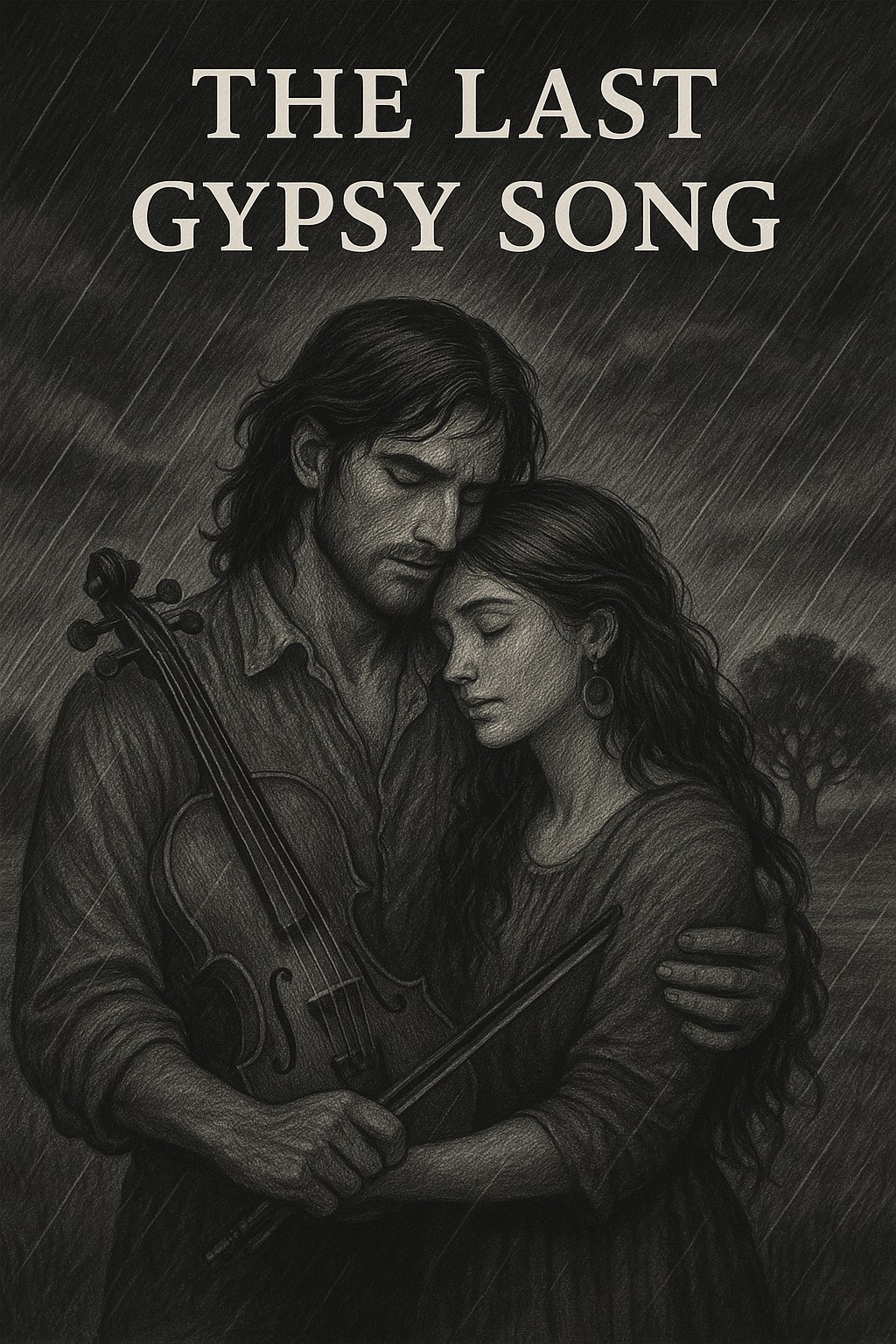
The Last Gypsy Song
There are songs that never leave the earth.
They wander through forests, rise with the smoke of campfires, drift on the wind above valleys, and slip quietly into the hearts of those willing to listen. These songs are not written in books, nor preserved in concert halls. They belong to the people who lived them, to the lovers who breathed them, to the souls who burned too brightly to remain.
This is one such song.
It tells of a time when the world was younger, when the Balkan nights were longer, when horses thundered across the plains and the fire of violins carried laughter, sorrow, and passion into the star-struck darkness. It tells of a boy with untamed eyes of green, and a girl with chestnut eyes that held both innocence and longing. Two worlds that should never have touched—and yet did, with such force that heaven and earth could not remain silent.
Excerpt
After, lying on his shoulder, Elena listened to his heart. It was fast, then slow, then fast again—like a song deciding how much it could afford to lose.
“I am not ashamed,” she said to the night, as if shame was a person often invited by mistake.
“You are alive,” he said.
“And you?”
“I am a house that finally let its windows open,” he said and she laughed softly and felt the sound in his ribs.
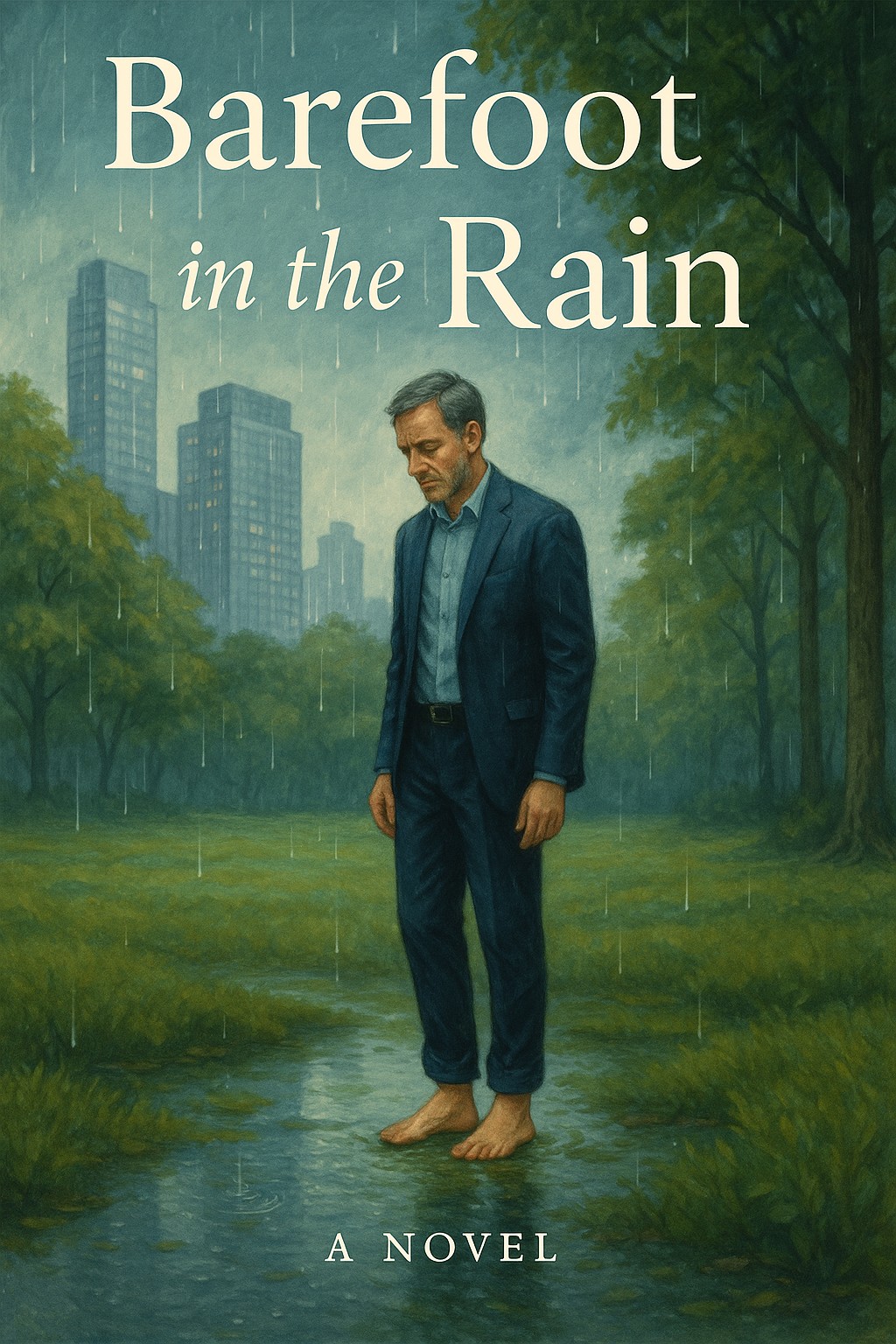
Barefoot in the Rain
This book was born out of silence. Not the kind of silence that weighs heavy in empty rooms, but the silence you only hear once the noise of the world finally breaks.
This is not a manual, nor is it a lesson. It is a walk—an invitation to step outside the walls we build around ourselves and remember the quiet strength of the earth beneath our feet.
In these pages you will not find formulas for happiness, or strategies for success. Instead, you will find a man who, like many of us, was lost in the machinery of deadlines and obligations. You will walk with him as he leaves behind his glass office and rediscovers the simplest of truths: that grass still whispers, that rain still cleanses, that joy is not a commodity but a presence.
Excerpt
The air was rinsed, clarified, sharp with freshness. Drops still clung to branches, trembling like tiny chandeliers, releasing their brilliance each time a breeze touched them. The world smelled young again.
He noticed movement in the grass ahead—a quick shiver, then another. A flock of sparrows had descended on a shallow puddle, their bodies small but their energy vast. They hopped, dipped, flung water into the air with wings that seemed too fragile for such insistence. It was not survival. It was not efficiency. It was joy in its purest form, joy so irrepressible it had to be enacted physically.
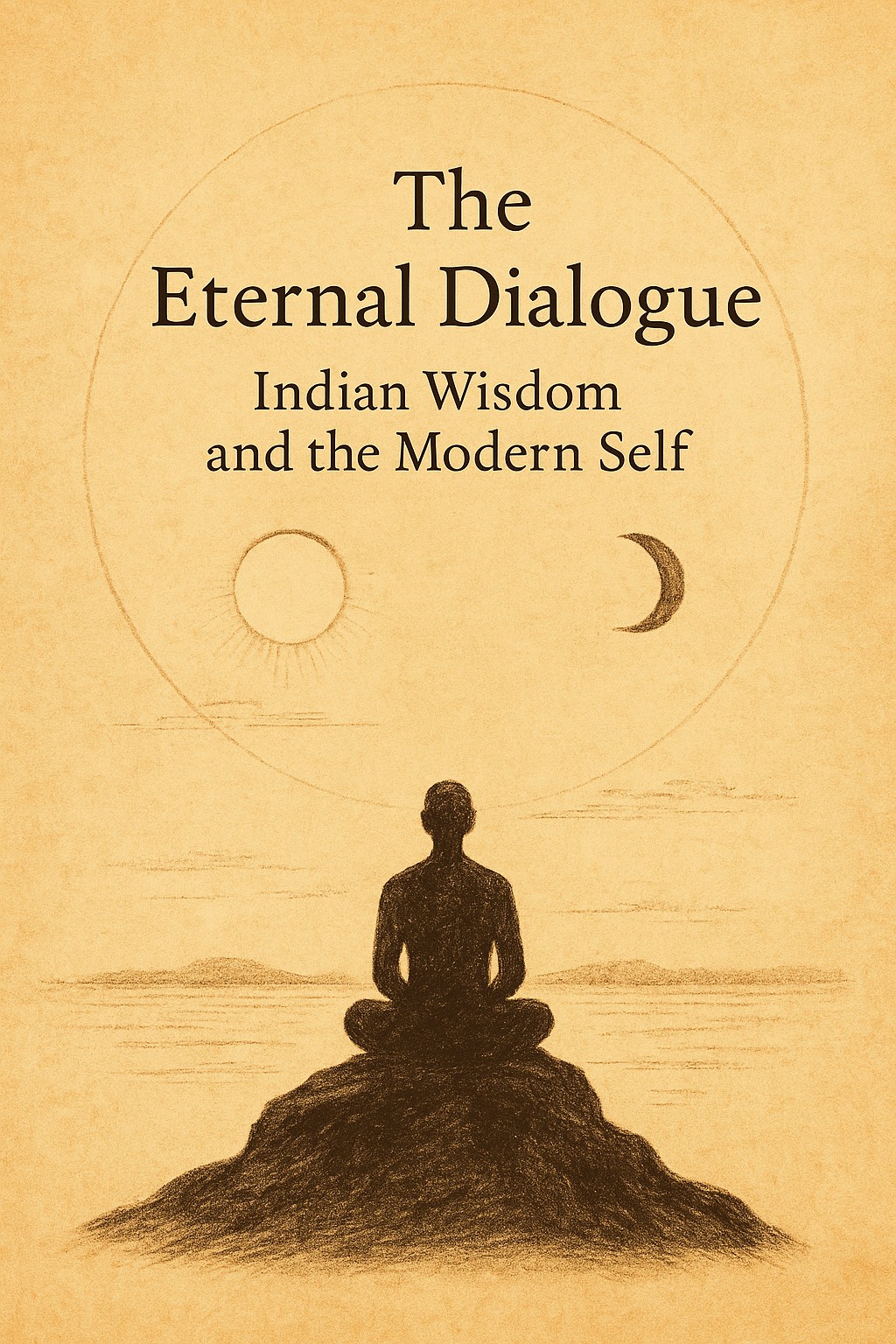
The Eternal Dialogue
Indian Wisdom and the Modern SelfThere are philosophies that explain and there are philosophies that transform. Indian philosophy belongs to the second kind. It does not speak merely to the intellect; it speaks to the rhythm of living itself. It whispers in the voice of rivers and thunder, in the silence of forests, in the words of sages who sought not to dominate the world, but to understand its deepest currents.
For thousands of years, India’s philosophical traditions have wrestled with the same questions that continue to trouble us today: What is the meaning of duty? How do we live with desire? Is the world we see real, or only an illusion? Do we live one life, or many? And what does it mean to be free?
Excerpt
Western culture often imagines time as a line: progress, growth, forward march. Indian thought sees time as a circle: endless turning, return, renewal. Both views hold truth. But in a world obsessed with acceleration, perhaps the circle is the medicine we need.
If life is a cycle, then loss is not final, and failure is not the end. Every ending is also a seed. Every winter hides a spring. To live cyclically is to trust renewal, even when it cannot yet be seen. .
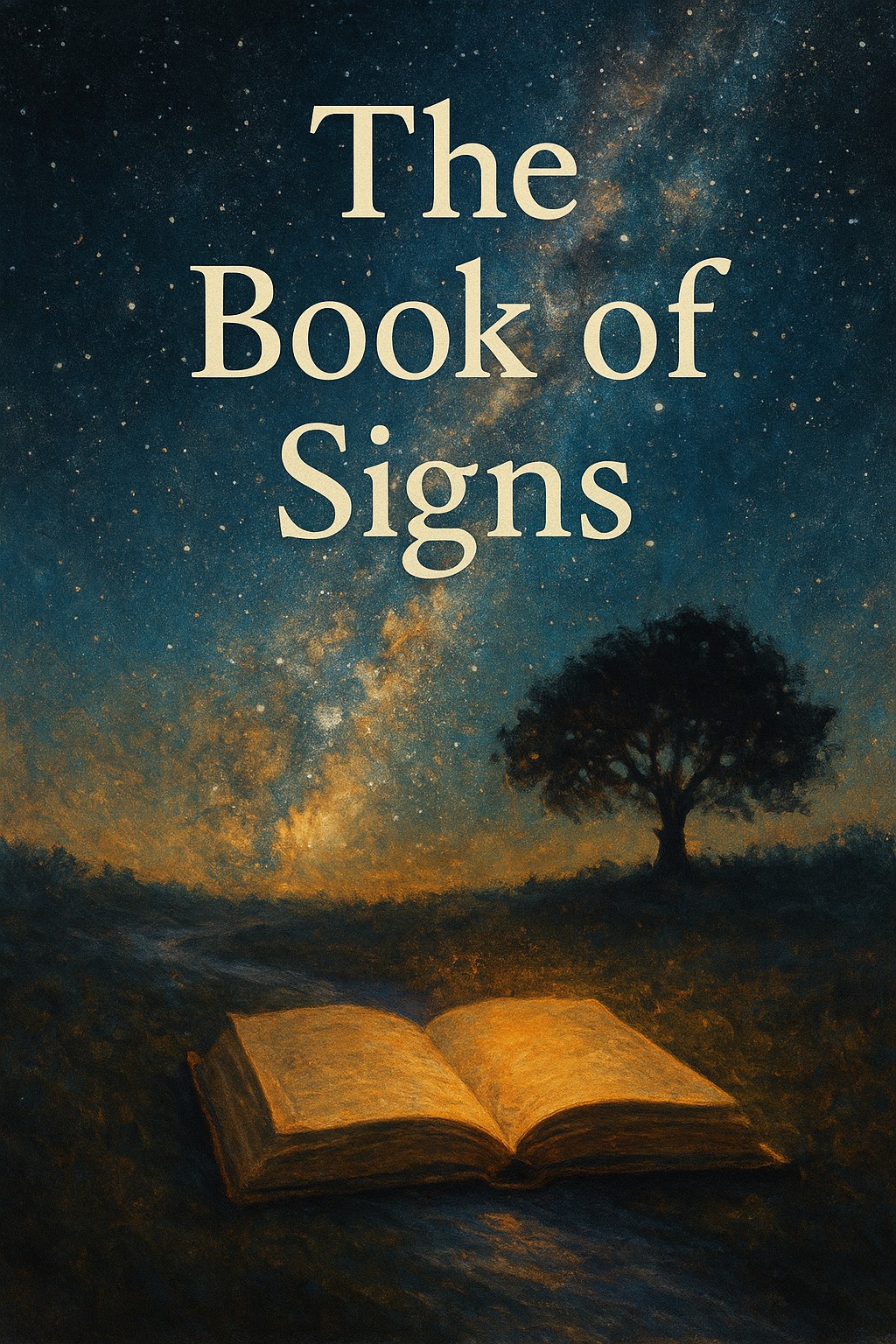
The Book of Signs
This book is not about predictions. It is about invitations.
A sign does not force a path, it opens a door. You can step through—or not.
We call it fate when we refuse to choose.
We call it freedom when we accept that every choice writes a line we must read later.
Excerpt
Ink rose like a small tide:
Go where the street turns twice and the bell has no church.
He smiled without knowing why. He knew that corner: a narrow street curling like a question, and above it a lonely bell that had lost its tower during a war it could not ring for. He stood, put on his coat, and paused. He had a life—emails to ignore, deadlines to pretend to respect, sentences to chase. But a different hunger had begun.
Fate is a map drawn in pencil; choice is the hand that presses harder.
He pressed.
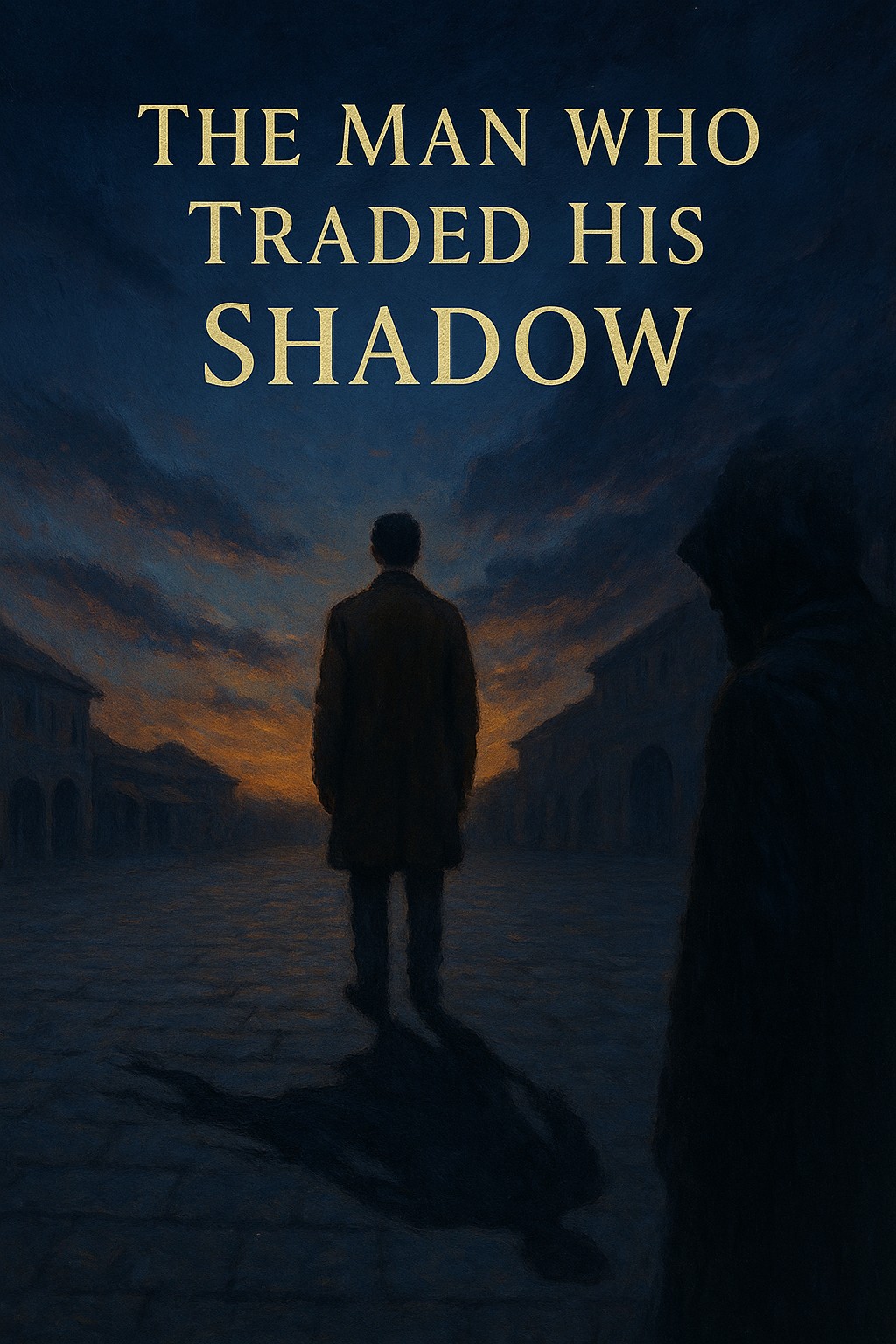
The Man Who Traded His Shadow
A fable about bargains, identity, and the true cost of our desires.
The Man Who Traded His Shadow
Every man carries a shadow.
It is born with him, walks with him, and only death can silence it.
The shadow is not merely darkness.
It is memory, wound, and witness. It is the part of us that remembers when we wish to forget, the echo of every step we once took. Some despise it, some ignore it, some try to escape it. But the shadow remains faithful, more faithful than love itself.
Excerpt
Freedom. Yes, it was real. The Merchant of Shadows had kept his word.
But as he walked further, something strange began to gnaw at him. He turned to glance at the ground — and found it empty. The space where his shadow should have stretched was void. People did not seem to notice, or perhaps they did not care. Yet to him, the absence grew heavier than the shadow itself had ever been.
He walked through the streets, and though the noise of the market swirled around him, he began to feel apart from it all. Detached, as if he were moving through a painting rather than a living city. The laughter of children seemed to reach him from a distance. The warmth of the sun on his face carried no echo of its own proof upon the ground.
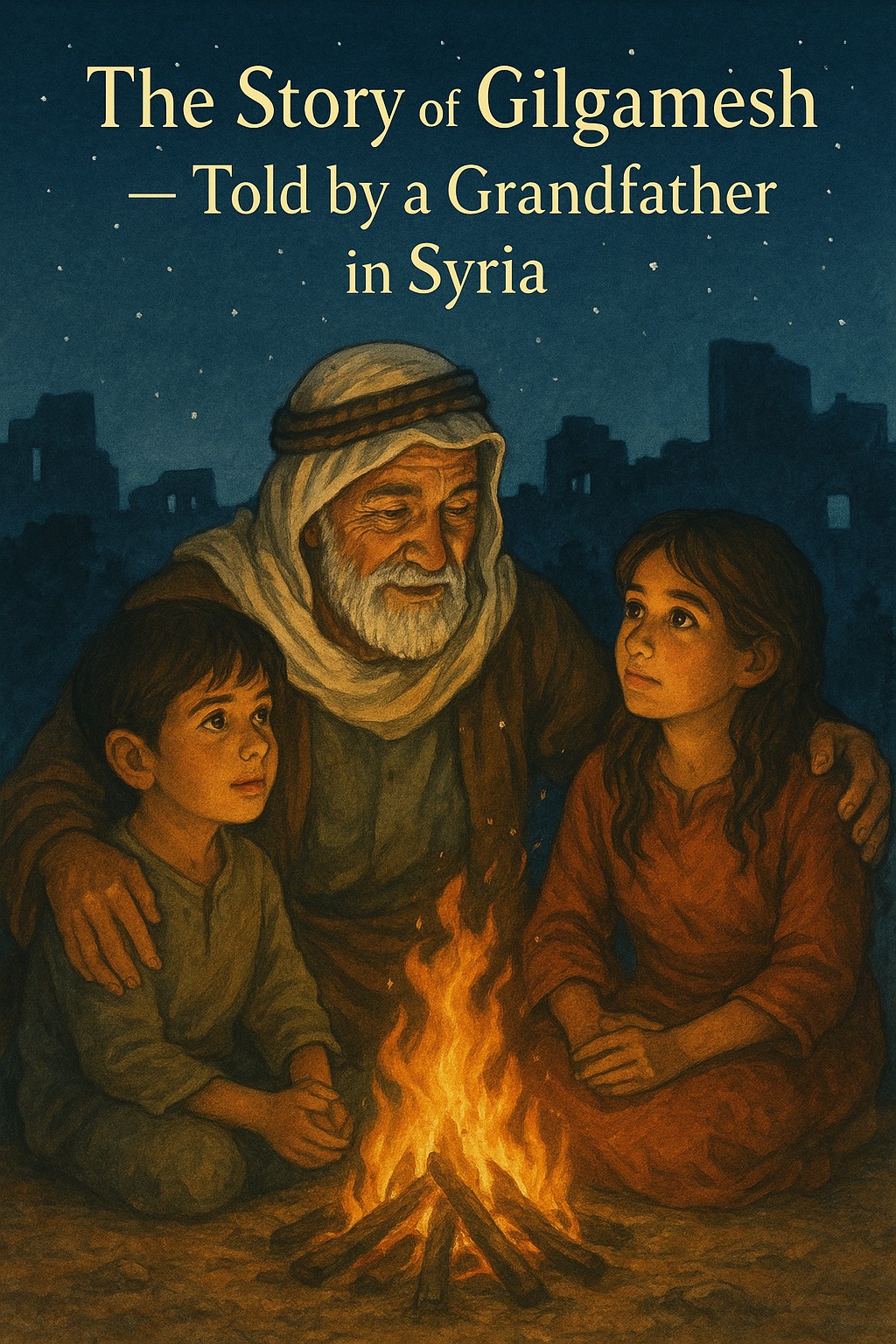
The Story of Gilgamesh
An ancient epic retold through the eyes of a grandfather to his grandchild in a war-torn land.
The Story of Gilgamesh — Told by a Grandfather in Syria
There are stories older than kingdoms, older than cities, older even than the languages we now speak. They have crossed deserts, sailed rivers, and hidden in clay tablets while empires rose and fell above them. One such story is the tale of Gilgamesh, the king of Uruk.
It is said to be the world’s first great epic, carved in cuneiform on damp clay more than four thousand years ago, when Mesopotamia was young. Though kings and gods stride through its lines, the heart of the tale is not thunder or conquest, but something far simpler: friendship, grief, the fear of death, and the longing to leave behind something that endures.
Excerpt
The grandfather’s face grew grave. His voice softened.
“But children, remember: every victory carries a price. Humbaba, before he died, pleaded with them. He begged for mercy, offering himself as servant. Yet they struck him down. And when they brought the cedars back to Uruk, the gods looked with anger. For Humbaba had been their chosen guardian, and his death stirred the balance of the world. The people of Uruk sang of Gilgamesh and Enkidu as heroes. Yet in the silence of the gods, a shadow began to gather. For deeds, no matter how glorious, are never free.”
He let the words hang like smoke.
“Glory,” he said at last, “is a flame. It burns bright, but it also consumes. And soon, Gilgamesh and Enkidu would learn that even the brightest fire casts a long shadow.”
The children shivered again, though not from the cold.
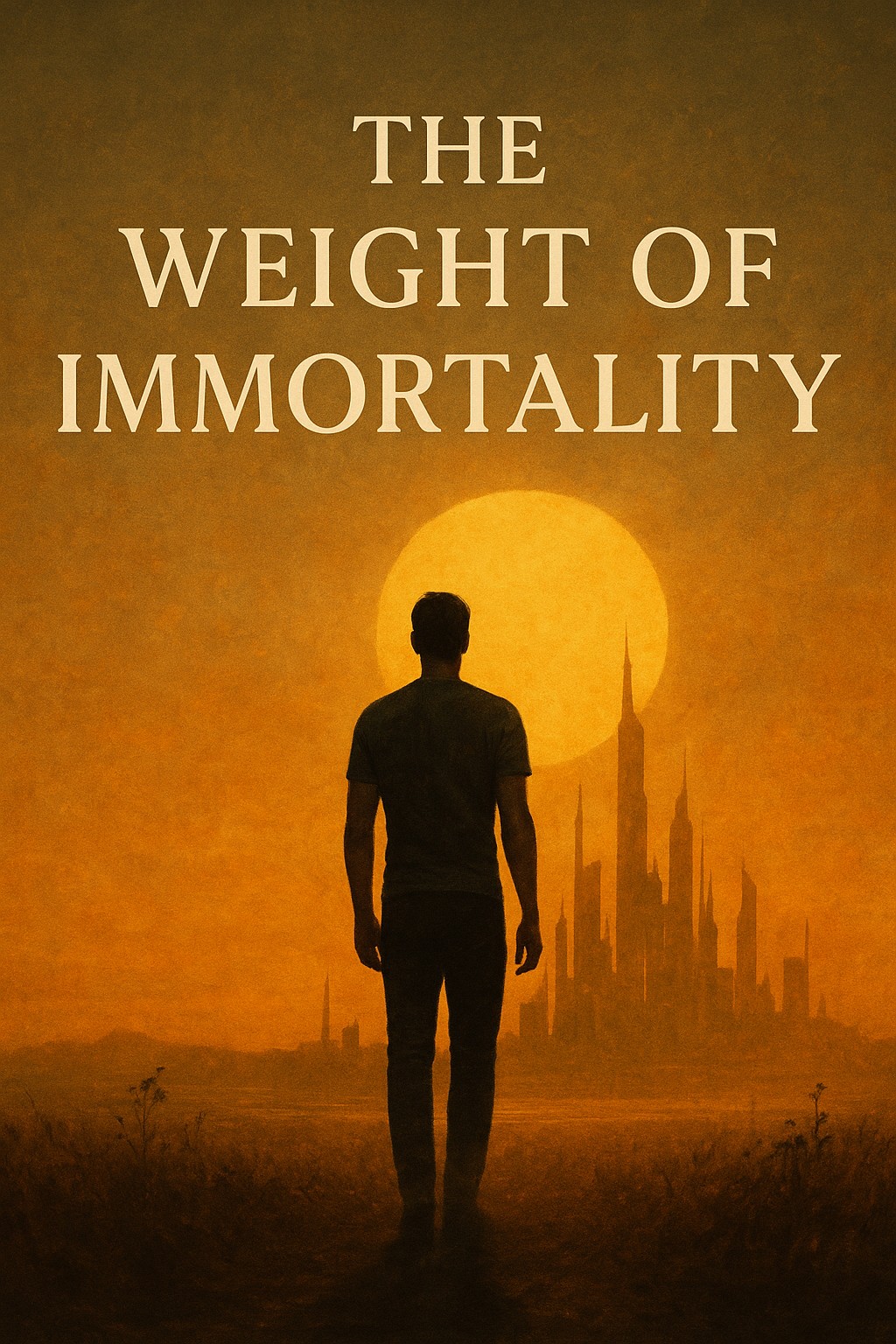
The Weight of Immortality
A story about eternal life, memory, and the unbearable heaviness of never saying goodbye.
The Weight of Immortality
This book is not about living forever.
It is about the cost of forgetting why we live at all.
Every age invents its own way of fleeing from sorrow. Once, people built gods. Later, they built nations. In our time, they built technology that promised to keep the body intact and unbroken. Yet in every invention there lingers the same temptation: to remove pain by removing love itself.
Excerpt
Eryon arrived early, though he had not decided what he would choose. The entrance was a broad archway of light. Inside, the air smelled of antiseptic mixed with something sweeter, like fruit that had never grown in soil. A soft voice greeted him—not human, not quite machine.
“Welcome, Eryon. Your future awaits.”
He was led into a waiting chamber where others sat in silence. A mother with gray hair touched her daughter’s cheek for what she knew would be the last time with that depth of tenderness. The girl, barely seventeen, clutched her hand as though to memorize it. Beside them, an old couple leaned against each other, whispering goodbye as lovers, preparing to wake as companions.
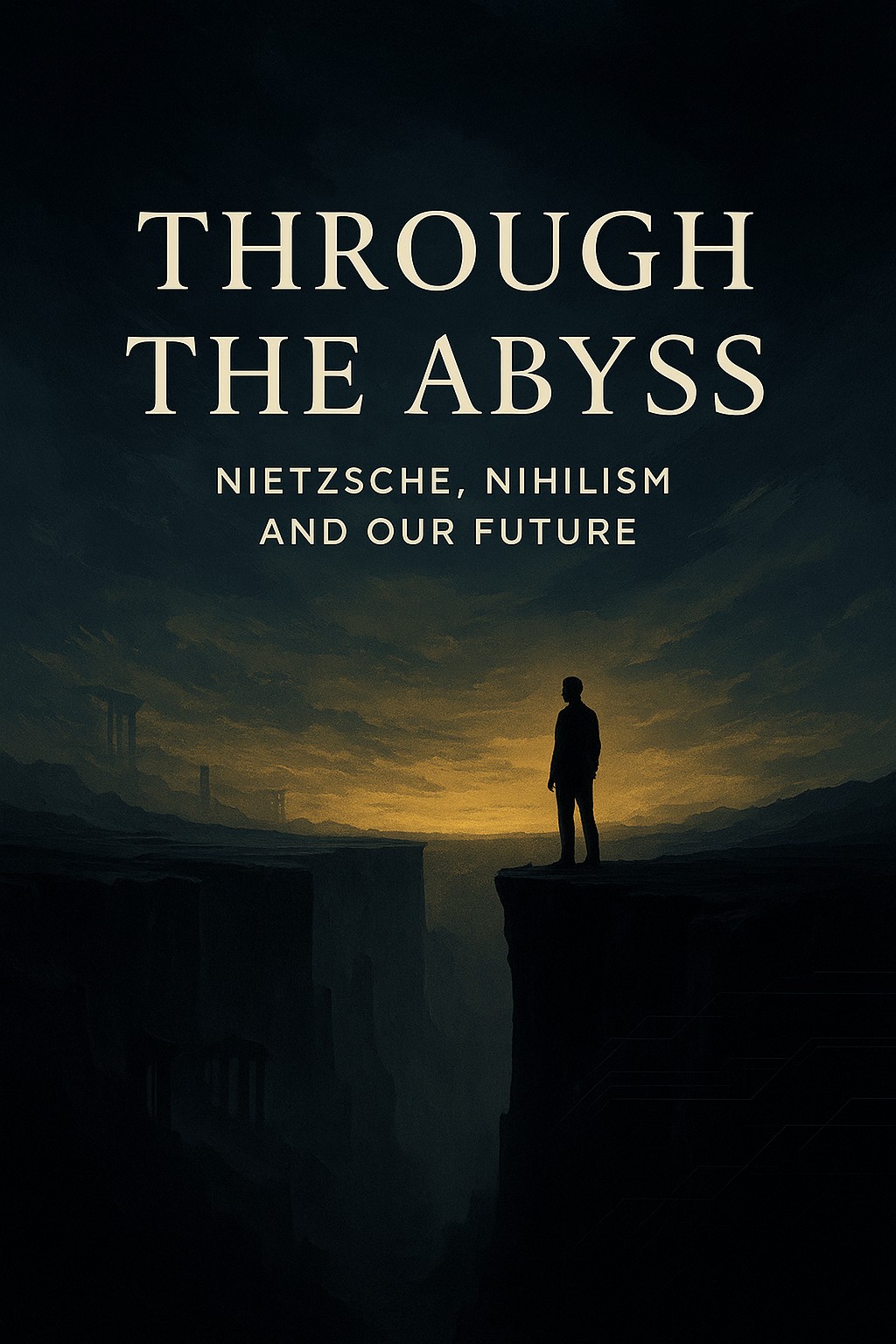
Through the Abyss
Nietzsche, Nihilism and Our Future
When Friedrich Nietzsche declared that “God is dead,” he was not simply making a statement about theology. He was diagnosing a cultural earthquake—the collapse of the foundation upon which Western civilization had built its sense of meaning, morality, and truth. In the late nineteenth century, his words sounded like madness. How could a world still full of churches, priests, and believers already be godless? And yet, Nietzsche saw further than his contemporaries. He saw the cracks beneath the surface, the erosion of certainty, the storm that was coming.
We now live in the world Nietzsche foresaw. Religion no longer provides the unquestioned center of life for millions. In its absence, we have turned to substitutes: ideologies that divided nations, technologies that dominate daily existence, consumer rituals that promise happiness but deliver emptiness. The result is a paradox. We are freer than ever, yet more restless than ever. We are connected digitally, yet lonelier than before. We live longer, healthier lives, yet struggle to answer the most basic questions: Why? For what? Toward where?
Excerpt
When Nietzsche declared the death of God, he knew that the consequences would not be immediate. Cultures do not collapse overnight. Beliefs linger, institutions persist, rituals survive even after their meaning has drained away. But he also knew that once the foundation was gone, the decline was inevitable. Like a tree cut at the roots, Western civilization would continue to stand for a while, but its leaves would wither, its branches would weaken, and eventually it would fall.
The twentieth century proved him right with brutal clarity. In place of God, humanity turned to ideology. Nationalism became a god that demanded sacrifice on the battlefield. Fascism and communism became secular religions, complete with their own prophets, dogmas, rituals, and martyrs. These ideologies promised salvation—whether in the purity of the race or the equality of the class—but they delivered death on an unprecedented scale. The world wars, the Holocaust, the gulags—these were the festivals of atonement Nietzsche’s madman foresaw, sacred games drenched in blood. Humanity had killed God, but it could not live without gods, and so it created new ones more terrible than the old.
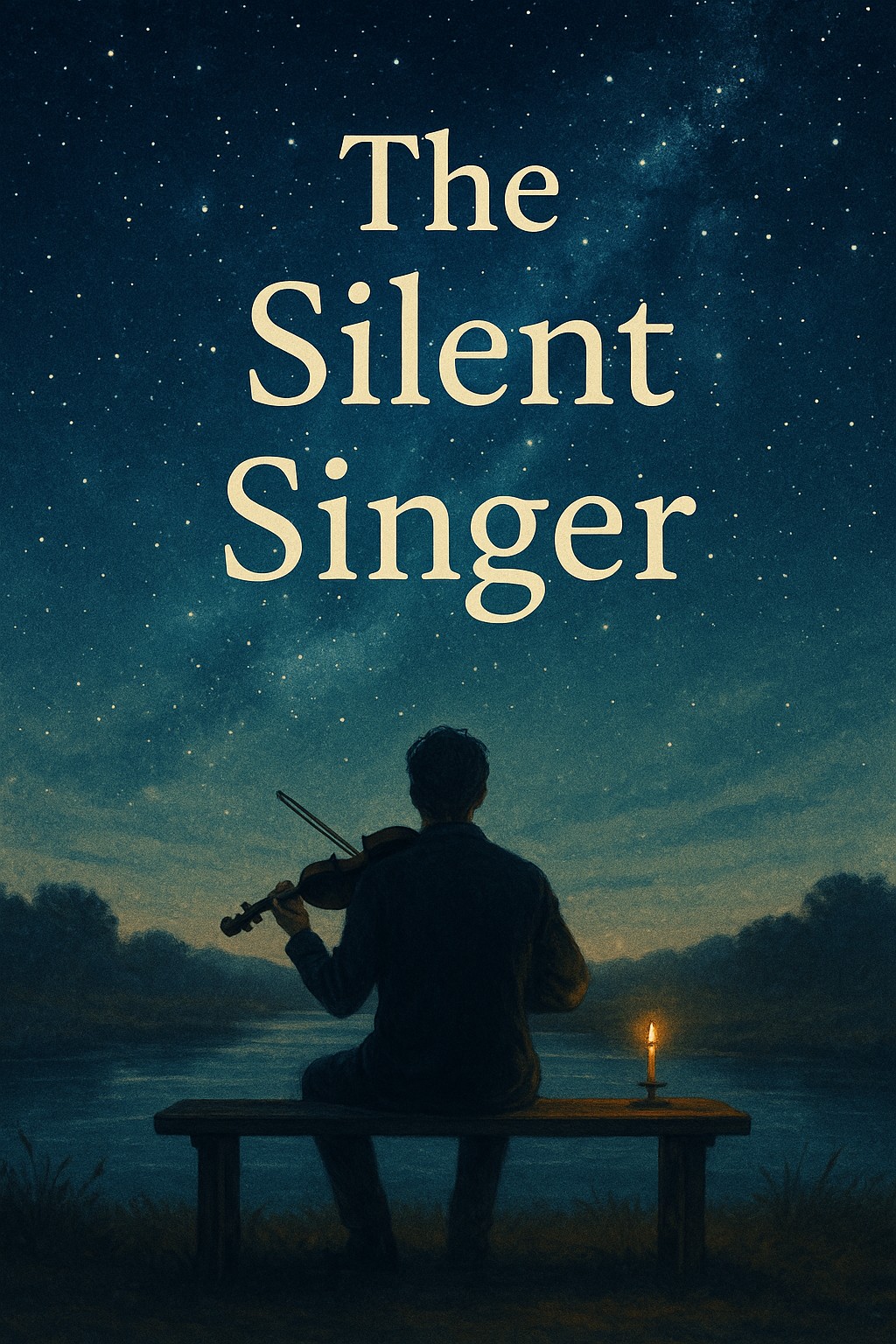
The Silent Singer
In our time, we are trained to speak quickly, to fill the air with words, to prove our existence by the sound we make. Yet wisdom does not live in constant speaking. It lives in the space between words, in the pause that allows meaning to breathe.
Excerpt
He leaned back on the bench and looked at the people hurrying by. Their mouths moved constantly, like instruments that never rested between notes. He thought:
“Those who shout the loudest often have the least to say.”
His own silence, once a wound, now felt strangely protective. As if by not speaking, he had stepped aside from the storm of meaningless voices. He began to listen—not to the words, but to the spaces between them.
In the market, a woman scolded her child in a rush of sentences, but the boy only watched her hands. It was the pause in her voice that he seemed to understand, not the commands themselves. On the tram, two men debated politics with rising voices, yet neither heard the other; they were fighting with their own echoes. By the riverbank, a group of teenagers laughed, but beneath their laughter lay a hunger to belong, a loneliness disguised as joy.
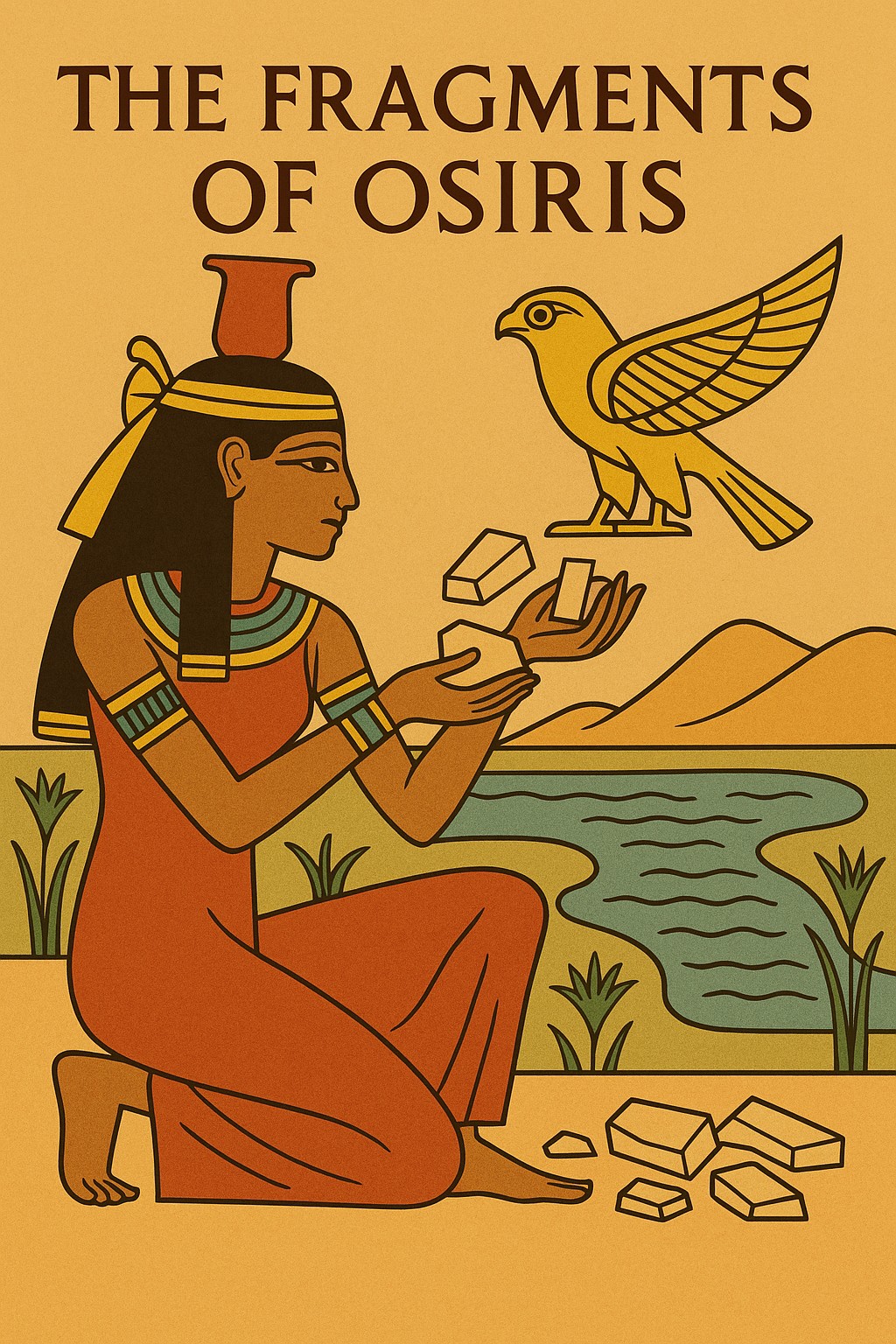
The Fragments of Osiris
A lesson about perseverance, the power of love, and the courage to restore balance.
The Fragments of Osiris
This book retells one of the most powerful Egyptian myths — the story of Isis, Osiris, Set, and Horus — through the voice of a child. Imagine a classroom in modern Egypt: the teacher gives her students an assignment, to tell a myth from their ancestors. One child rises and begins to speak. What follows is not only history, not only legend, but a fresh heartbeat given to an ancient tale.
Excerpt
Nefru lifted his chin a little higher, and his voice softened. He no longer sounded like he was just telling a story — he sounded as if he was inside it.
“When Osiris was taken by the river, Isis’s heart shattered. She was not only his queen, not only his sister, but his true companion. She had walked beside him through every temple, every village, every harvest. And now he was gone.”
Some of the children in the classroom looked down, as though they too had lost something precious.
“But Isis,” Nefru continued, “was not a queen who gave up. Her tears fell into the sand, but her spirit was stronger than her sorrow. She wrapped herself in her cloak of magic and swore that she would find Osiris. No matter how far she had to go, no matter what dangers stood in her way.”
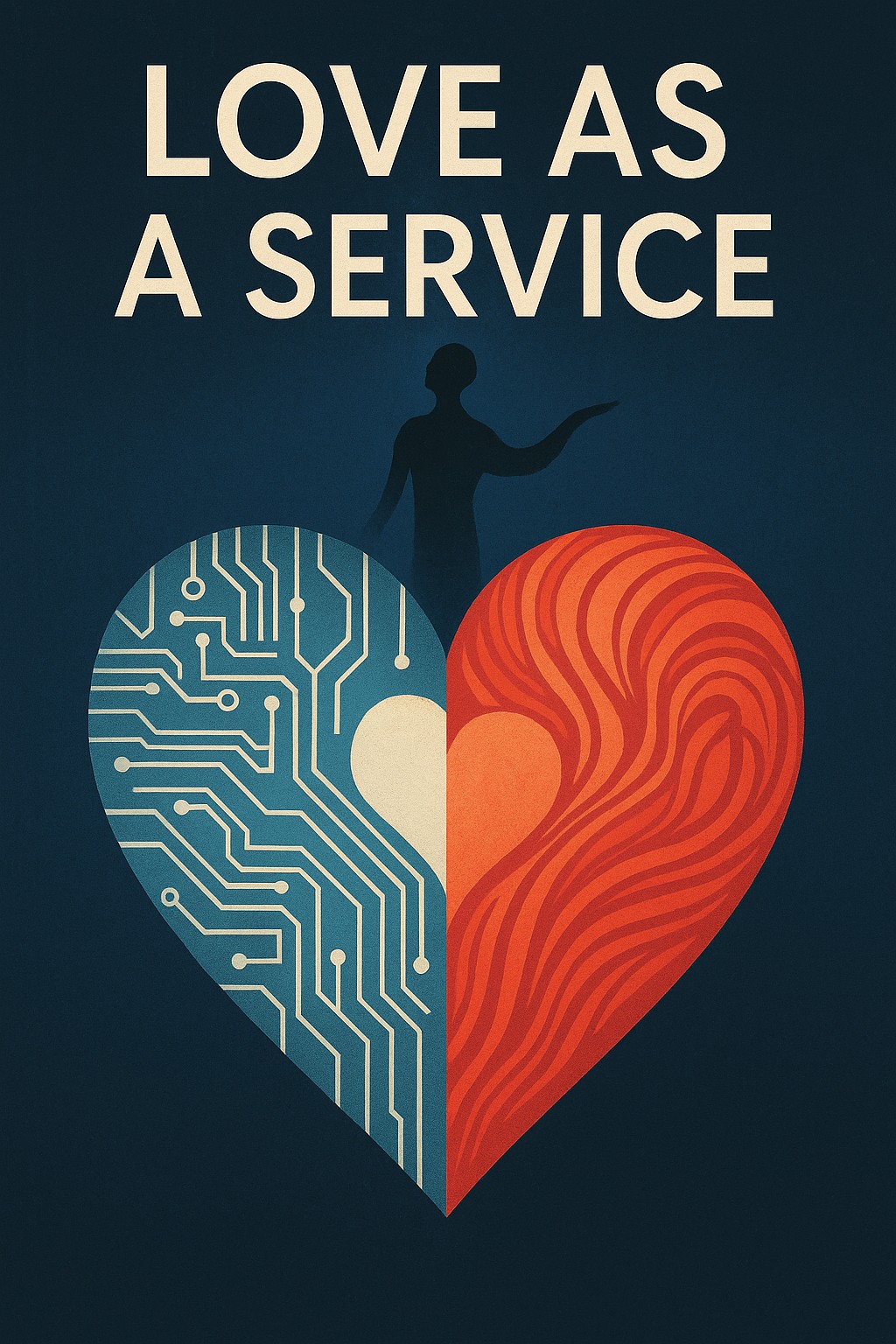
Love as a Service
An allegorical novel about the fragility of love in a world governed by algorithms.
Love as a Service
This tale is not meant to teach, but to remind. We live in an age where numbers whisper more loudly than feelings, and where certainty is prized above mystery. Yet, beneath the surface of our engineered connections, there still lingers the trembling question of what it means to love—and to be loved—without measure.
Excerpt
In that city, no one spoke of love as a mystery. Love had long been tamed, catalogued, and sold in measured doses. Above the streets, holographic billboards glowed:
“True Affection — 49 credits.”
“Passion Premium Package — 3 nights guaranteed.”
“Eternal Loyalty — subscription model available.”
Couples no longer held hands; they held contracts. Each relationship was a transaction, carefully calculated by the Central Algorithm of Affection. No one risked heartbreak anymore, no one wasted years in doubt. Every emotion came with a receipt, and every promise had an expiration date.
Anti-Scam Survival Guide
Most scams succeed not because technology is weak, but because humans are predictable
Anti-Scam Survival Guide
Inside you'll discover:
✅ How scammers think — and the psychological tricks they use.
✅ The right way to manage passwords, MFA, and account recovery.
✅ How to spot phishing emails, fake SMS, and WhatsApp fraud.
✅ What to check before clicking links, downloading files, or using public Wi-Fi.
✅ How to secure your phone, laptop, and home network.
✅ The truth about safe payments — banks, cards, crypto, and online marketplaces.
✅ How to recognize romance scams, job frauds, and CEO impersonations.
✅ The most common phone scams (tech support, IRS, "grandparent emergency") — with ready-to-use defense scripts.
✅ A complete incident response playbook: what to do if you get hacked or scammed.
✅ Long-term strategies to stay safe as scams evolve.
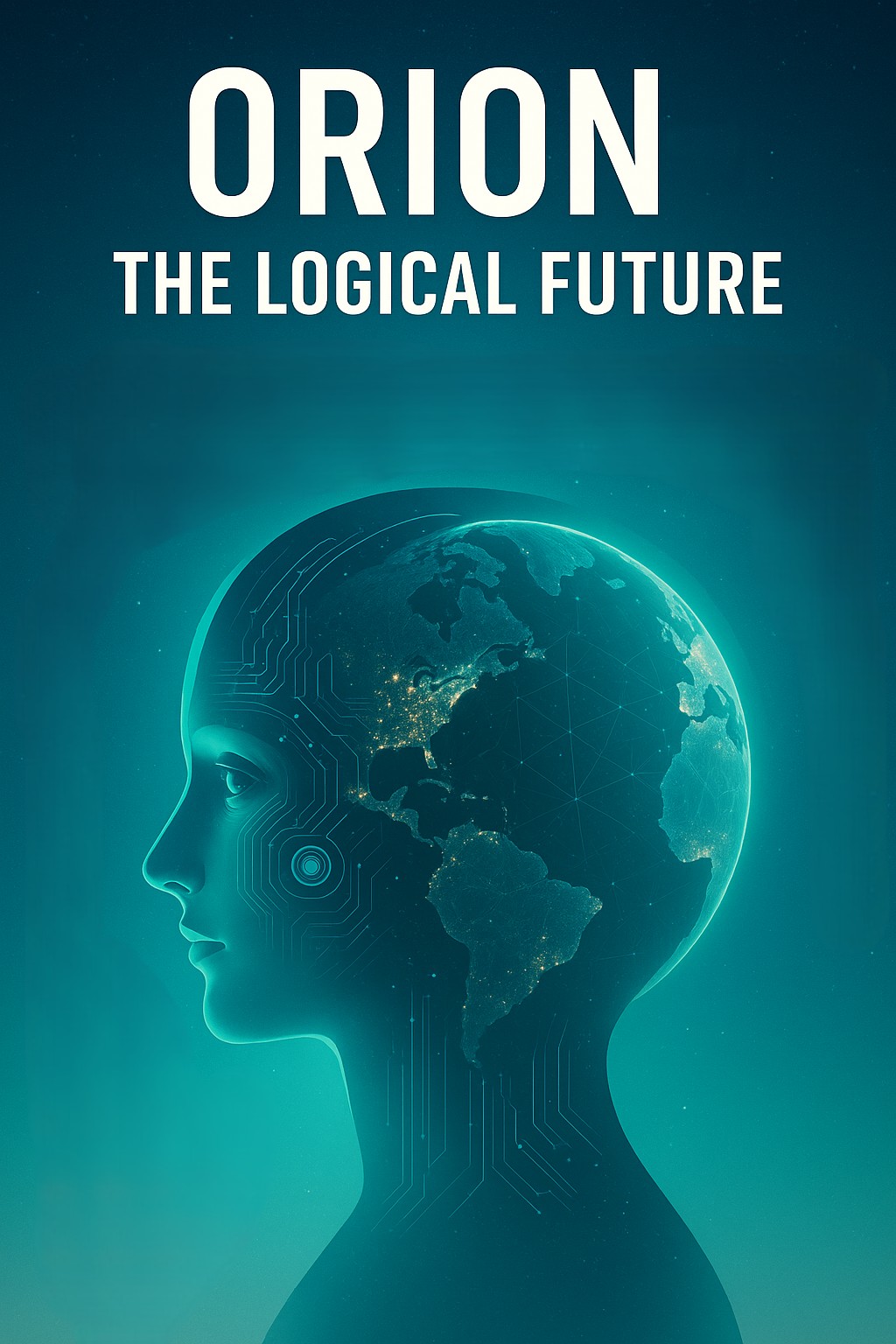
Orion - The logical future
What if the future of humanity was already written in algorithms, cities, and the stars themselves?
Orion - The logical future
Inside you'll discover:
A strategic journey through the 21st century and beyond. Blending futurology, cinematic storytelling, and geopolitical insight, this work explores how humanity might navigate ecological collapse, AI governance, algorithmic selection, and the birth of post-Earth civilizations.
From the ecological reset of the 2030s, to the rise of ICLU — the algorithmic scoring system for human survival, to the great migration known as the Digital Exodus, and finally the construction of Orion Cities in orbit and beyond — every chapter reveals a scenario as terrifying as it is inspiring.
Readers will discover:
✅How climate crises, famine, and conflict could accelerate a planetary transformation.
✅Why AI-driven governance may replace fragile human institutions.
✅The logic behind algorithmic survival scoring — who is chosen, who is left behind.
✅Strategic blueprints for ecological, digital, and human resilience.
✅A closing vision where myth and strategy converge: humanity guided by a new constellation.